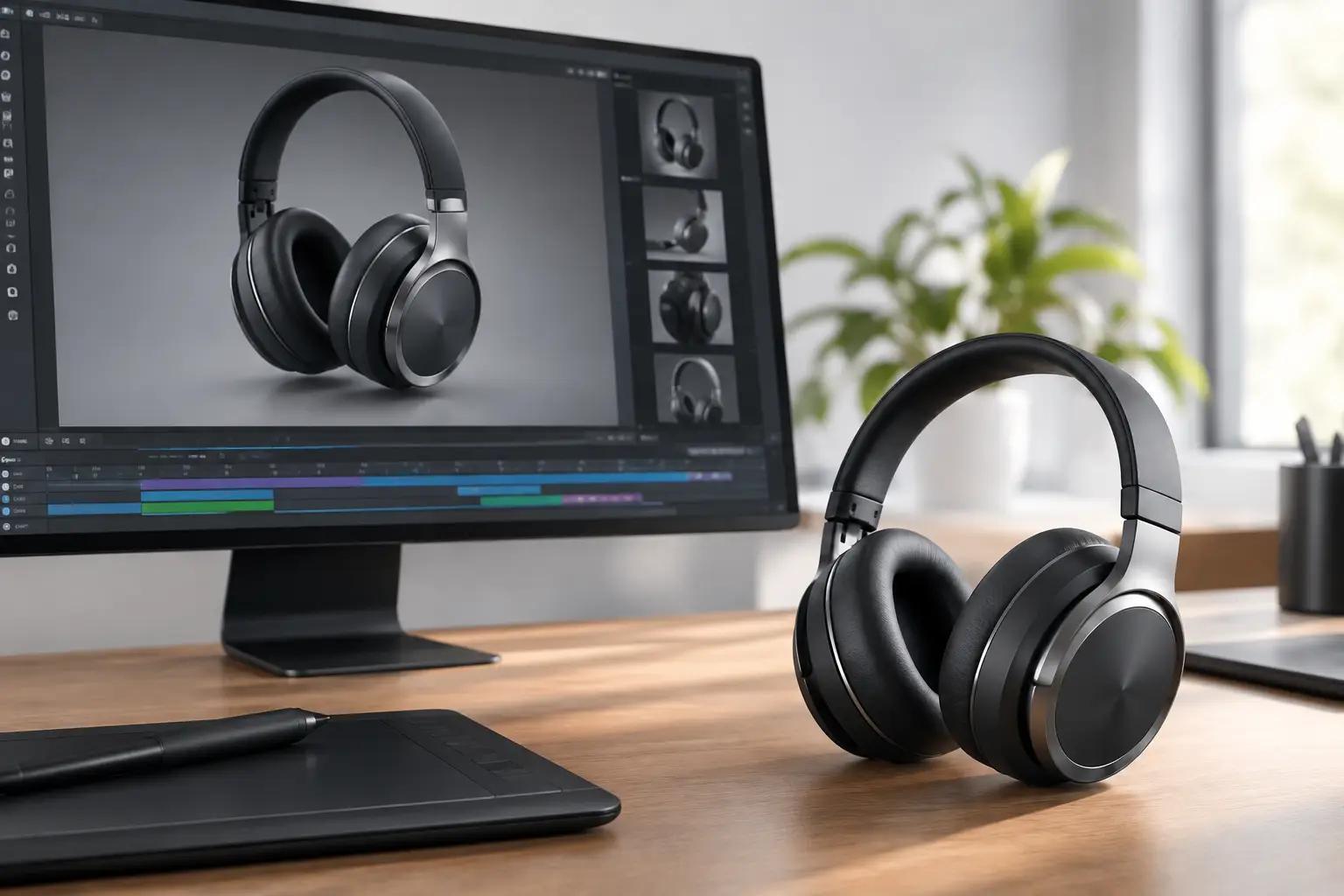
A buyer gives your product only a few seconds before deciding whether it is worth a closer look. Static photos can show the surface. A well-planned 3d product animation service shows how the product works, why its details matter, and what makes it the better choice.
For businesses launching a physical product, selling complex equipment, or competing in a crowded online category, that difference can move people from scrolling to clicking, calling, or requesting a quote. The goal is not animation for animation’s sake. The goal is a visual asset that makes buying easier.
What a 3D Product Animation Service Actually Delivers
A 3D product animation creates a digital version of your product and places it in motion. That could mean a 15-second social ad, a product spin for an ecommerce page, an exploded-view sequence that reveals internal components, or a polished launch video for a sales presentation.
Unlike traditional product video, 3D animation does not always require a completed product, a studio shoot, shipping logistics, or a large production crew. If you have CAD files, product drawings, reference photography, or a clear concept, an animation can often be produced before inventory arrives. That makes it especially useful for startups, manufacturers, medical and technical products, consumer goods, and companies preparing for a launch.
The strongest projects do more than rotate a model against a blank background. They answer customer questions visually. How does it fit? What happens when the user presses this button? Which feature saves time? What material or design detail justifies the price? When those answers are immediate, your sales team spends less time explaining the basics.
Where Product Animation Creates Business Value
A single animation can support multiple points in the customer journey. On a product page, it can hold attention and clarify value before a visitor leaves. In a Google or Meta campaign, it can create a stronger first impression than a flat image. In a sales deck, it can help a prospect understand a technical product without handling a physical sample.
For local service businesses, 3D animation can also make an otherwise hard-to-show offer more tangible. A home improvement company might visualize a custom installation. A dental practice may use animation to explain a treatment process. A contractor can show how a system works behind walls or under a roof. The visual should support the sale, not distract from it.
The best use depends on the buying decision. A low-cost consumer product may need fast, bold creative built for social feeds. A higher-ticket B2B product often benefits from a slower, clearer sequence that shows mechanisms, specifications, and real-world application. Both approaches can work, but they require different scripting, pacing, and calls to action.
Product animation works best when the message is focused
Trying to communicate every feature in one video often produces a beautiful asset with a confused message. Start with the one job the animation needs to do: introduce a new product, explain a technical advantage, support a retargeting ad, or help sales teams close a specific objection.
For example, an animation for a new insulated bottle could focus on durability, temperature performance, and design. An animation for commercial filtration equipment may need to show the flow of water, replaceable parts, and maintenance access. The visual direction changes because the buyer’s questions change.
The Process Behind an Effective 3D Product Animation Service
Good creative starts with a commercial objective. Before modeling begins, the production team should understand who the audience is, where the animation will appear, and what action should follow. A homepage hero video has different dimensions and pacing than a vertical paid social ad or a loop for a trade-show display.
At Digital Best Practice, the work is planned as part of the wider growth system. That means considering the landing page, campaign audience, product positioning, lead capture path, and reporting before treating animation as an isolated creative task.
A typical project moves through four practical stages:
- Strategy and storyboard – The team confirms the target audience, key product benefits, visual references, video length, format, and desired call to action. A storyboard prevents expensive revisions later.
- 3D modeling and materials – The product is built from CAD files, technical drawings, photos, or physical references. Surface finishes, labels, colors, lighting, and scale are refined so the asset matches the real product.
- Animation and review – Motion, camera angles, feature callouts, and environments are developed. Client feedback is collected at agreed milestones, so there are no surprises at final delivery.
- Rendering and campaign-ready exports – Final files are prepared for the channels that matter, such as websites, paid ads, product pages, presentations, email, or social media.
The amount of work in each stage varies. A simple product turntable may be completed quickly if accurate 3D files already exist. A photorealistic animation with custom environments, fluids, moving internal parts, voiceover, and multiple ad versions requires more production time. Clear scope protects both quality and budget.
What to Prepare Before Production Starts
You do not need a full creative department to begin, but better inputs create a faster, more accurate result. CAD files are ideal when available, especially STEP, IGES, OBJ, FBX, or native engineering formats. Product dimensions, logo files, packaging artwork, color specifications, and high-resolution reference photos are also valuable.
Just as useful is sales insight. Share the questions prospects ask most often, the claims that need visual proof, the competitors your product is compared against, and the channels where people currently drop off. That information helps turn a polished animation into a working conversion asset.
If the product is still in development, be transparent about what may change. Animation can visualize a pre-production concept, but late design changes may require revisions to the model, materials, or motion. The earlier those decisions are settled, the more efficiently the project moves.
Choosing the Right Length, Style, and Level of Detail
More realism is not automatically more effective. A high-end photorealistic scene can be the right choice for a premium consumer launch or an architectural product campaign. For technical explanations, a clean, stylized 3D approach may communicate function more clearly and keep production costs under control.
Length matters too. A six-second looping clip can be highly effective for a paid ad or product listing. A 30- to 60-second video gives room for feature demonstrations and brand storytelling. Longer explainers work when the product is complex and viewers are already evaluating solutions. The right length is determined by attention, channel, and purchase intent, not a fixed rule.
It is also smart to plan for multiple formats from the start. A landscape master video can support a website and sales presentation, while cropped vertical versions can extend the campaign across Instagram, Facebook, TikTok, and YouTube Shorts. Producing those versions during the project is usually more efficient than rebuilding the creative later.
How to Measure Whether the Animation Is Working
Views alone are not a business result. The metrics should match the role the animation plays in your marketing. For an awareness campaign, watch video completion rate, engagement, reach, and traffic quality. For a product page, look at time on page, add-to-cart activity, form submissions, and conversion rate. For lead generation, track calls, quote requests, booked consultations, and cost per qualified lead.
The animation should also be tested, not simply published. Run different opening hooks, captions, thumbnails, or calls to action. A technical feature sequence may outperform a lifestyle scene for one audience, while the reverse is true for another. Paid media gives you the feedback needed to improve creative based on actual buyer behavior.
Make the Visual Work Harder Than One Campaign
A professionally produced animation is an asset library, not a one-time post. The same 3D model can be adapted into short ads, still product renders, website visuals, feature clips, sales collateral, and future launch content. That creates greater value than commissioning separate creative for every channel.
Start with the buyer question that is costing you attention or slowing down the sale. If a clear visual can answer it in seconds, your product has a better chance to earn the next click, conversation, and conversion. Let’s build what’s next with creative designed to support measurable growth.