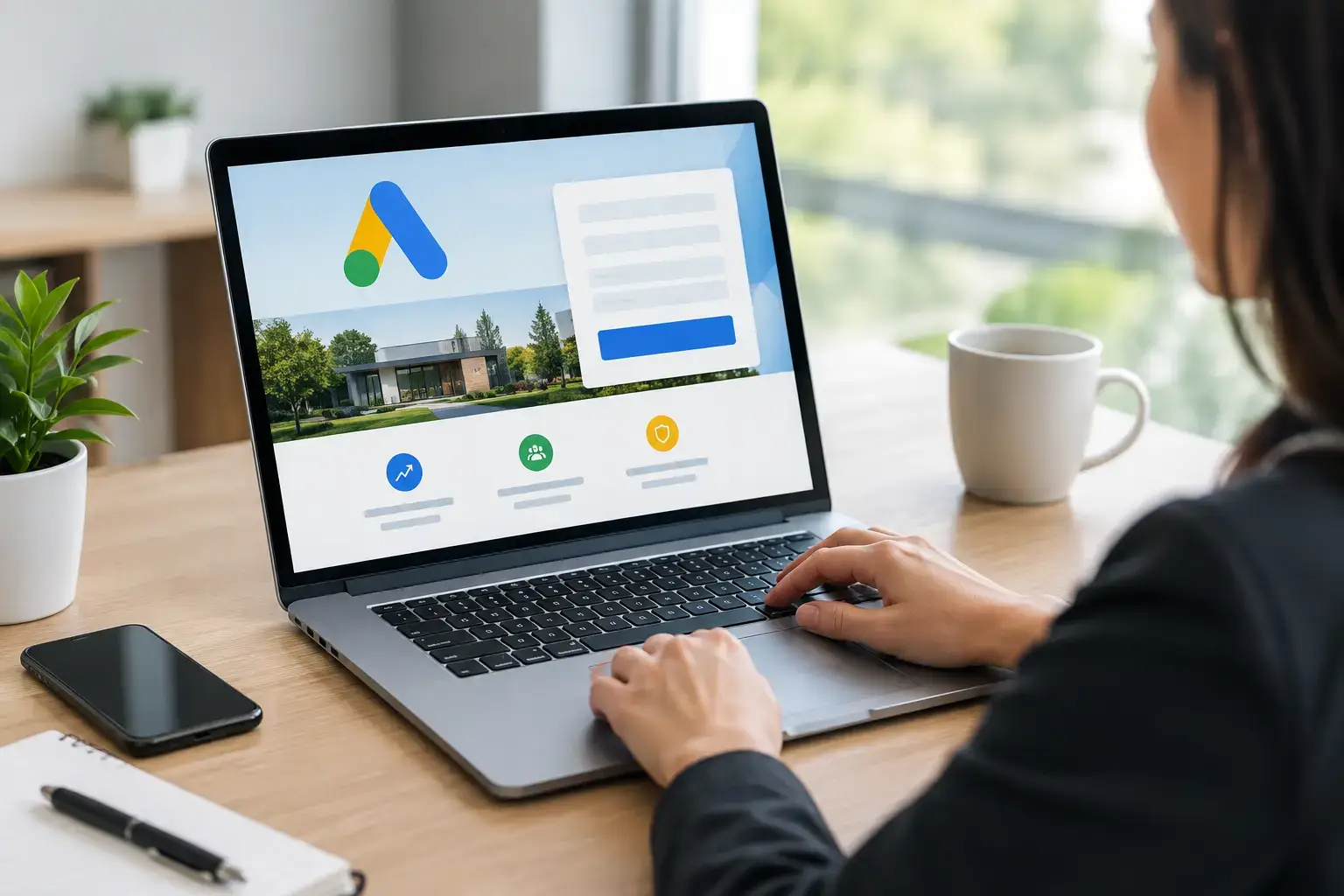
A paid click is expensive when it lands on a page built for everyone. Google Ads landing pages need one clear job: turn a high-intent visitor into a call, form submission, booking, or purchase. If the message changes between the ad and the page, the visitor has to work too hard to understand what happens next. Most will leave.
For local service businesses and growing companies, this is where paid media often loses momentum. The campaign may target the right search terms, the budget may be sound, and the ad may earn clicks. But if the destination is a slow homepage, a vague service page, or a contact form buried below the fold, those clicks do not become opportunities.
Why Google Ads landing pages affect more than conversions
Google Ads does not operate in isolation. The page behind each ad influences the visitor experience and can affect landing page experience, ad relevance, Quality Score, and ultimately the cost of reaching potential customers. A relevant, useful page gives both the customer and the platform clearer signals.
More importantly, your landing page decides whether a person who searched “emergency plumber near me” or “commercial HVAC repair” feels confident enough to contact you. They are not looking for a company history lesson. They want confirmation that you solve their problem, serve their area, can respond at the right time, and are easy to reach.
That does not mean every campaign needs a separate page for every keyword. Overbuilding pages can create maintenance issues and thin, repetitive content. The right approach depends on your offer, service area, sales cycle, and budget. In many accounts, a focused page for each core service or campaign theme is enough to create a significant lift.
Start with search intent, not a page template
The strongest landing pages begin before design or copywriting. Start with the exact reason a person clicked.
A search for “roof repair estimate” signals a different need from “best roofing company.” The first visitor is closer to taking action and should see a direct estimate offer, service details, proof, and a short form. The second may still be comparing options, so clear differentiators, reviews, project examples, and service-area coverage can do more to move them forward.
Match the wording in your headline to the ad and keyword theme. If an ad promises same-day appliance repair, the landing page should lead with same-day appliance repair – not a broad statement about quality service. This message match reassures visitors that they are in the right place and reduces the hesitation that kills conversion rates.
Give each page one primary action
A landing page can offer a phone number and a form, especially for service businesses where some customers prefer to call. But both options should support the same outcome: starting a qualified conversation.
Avoid competing calls to action such as “Request a Quote,” “Download a Guide,” “View Services,” “Read Our Blog,” and “Follow Us” all on the same page. Navigation-heavy pages are useful for exploration, but a paid campaign needs focus. Ask for the next best action, make it easy, and remove distractions that do not help the visitor take it.
Build the page around trust and speed
A visitor can make a snap decision about your business before reading the second section. The opening screen needs a clear headline, a practical benefit, a visible call to action, and enough credibility to make action feel low-risk.
For a local business, credibility may include service areas, years in business, review ratings, licensing or insurance information where relevant, response-time commitments, or a concise explanation of your process. Use only proof you can support. Inflated claims may generate attention, but they create friction when a lead speaks with your team.
The page also needs to perform technically. Mobile traffic makes up a large share of Google Ads clicks for many local services, and a page that shifts, stalls, or hides its form behind a pop-up can waste budget quickly. Prioritize fast load times, readable type, tap-friendly buttons, compressed media, and stable layouts. Core Web Vitals are not just a technical checklist when they affect whether a prospect stays long enough to contact you.
Keep forms short enough to finish
A long form can help screen out poor-fit leads, but it can also discourage motivated prospects. For many campaigns, name, phone number, email, location, and a short description of the need are enough to begin.
If your team needs more context, collect it during the follow-up call or use conditional fields that appear only when relevant. The trade-off is simple: more fields may improve lead detail, while fewer fields usually improve completion rates. Test based on lead quality, not form submissions alone.
Speed after submission matters too. A landing page is only half the conversion system. If leads sit unanswered for hours, the value of an optimized campaign drops. Route notifications to the right person, set clear response expectations, and track whether booked jobs or sales actually follow from each campaign.
What to include on a high-performing landing page
The exact layout changes by industry, but the most effective pages usually answer a visitor’s key questions in the order they arise: What do you offer? Is it right for my situation? Why should I trust you? What do I do now?
Your first section should make the offer immediately clear. Follow it with concise service benefits or a description of how the process works. Add relevant proof close to the point of decision, then repeat the call to action after visitors have enough information to act.
A useful page often includes these four elements:
- A keyword-aligned headline and a direct description of the service or offer.
- A prominent phone number, form, booking option, or other action built for mobile users.
- Specific trust signals, such as verified reviews, credentials, service coverage, or real customer outcomes.
- Clear answers to common objections, including timing, availability, pricing approach, or what happens after an inquiry.
Do not add sections just because a competitor has them. A home remodeling campaign may need project photos, financing information, and a consultation process. An urgent restoration campaign may need a fast-response promise, insurance guidance, and a click-to-call button. The page should reflect the decision your customer is making.
Measure the leads that matter
A landing page is not finished when it goes live. Conversion tracking should capture form submissions, calls from ads, calls from the website, booked appointments, and any other action that represents real business value. Without that visibility, it is easy to celebrate a low cost per lead while missing that many inquiries are unqualified, duplicate, or never contacted.
Connect campaign data to your sales process where possible. Review which search terms, ads, locations, devices, and landing pages produce calls that turn into estimates, appointments, and revenue. This helps you make better decisions than optimizing for click-through rate alone.
For example, a page with fewer leads may outperform a high-volume page if its leads answer the phone, fit your service area, and become customers. This is why a unified reporting view matters. Paid media, website performance, call tracking, and follow-up activity should tell one story about growth.
Test with a purpose
Testing works best when it addresses a clear question. Test one major change at a time, such as the headline, offer, call-to-action wording, form length, proof placement, or mobile layout. If you change everything at once, you may improve results without knowing why – or lose performance without a reliable path back.
Give each test enough traffic and time to produce useful evidence. Small campaigns may not support constant split testing, and that is fine. Start by fixing obvious issues: poor mobile performance, unclear offers, weak message match, and missing conversion tracking. These changes often create more value than minor button-color experiments.
At Digital Best Practice, we treat the landing page as part of the full acquisition system, not a standalone asset. The ad, the page, the tracking, the lead response process, and the reporting all need to work together. One team can see where momentum is breaking and improve it before paid clicks become wasted spend.
The best next step is not to copy a generic landing page layout. Review the searches you are paying for, listen to the questions your best prospects ask, and build a page that makes the right action feel obvious. That is how a Google Ads budget starts producing more than traffic – it starts producing opportunities your business can actually grow from.